Key takeaways
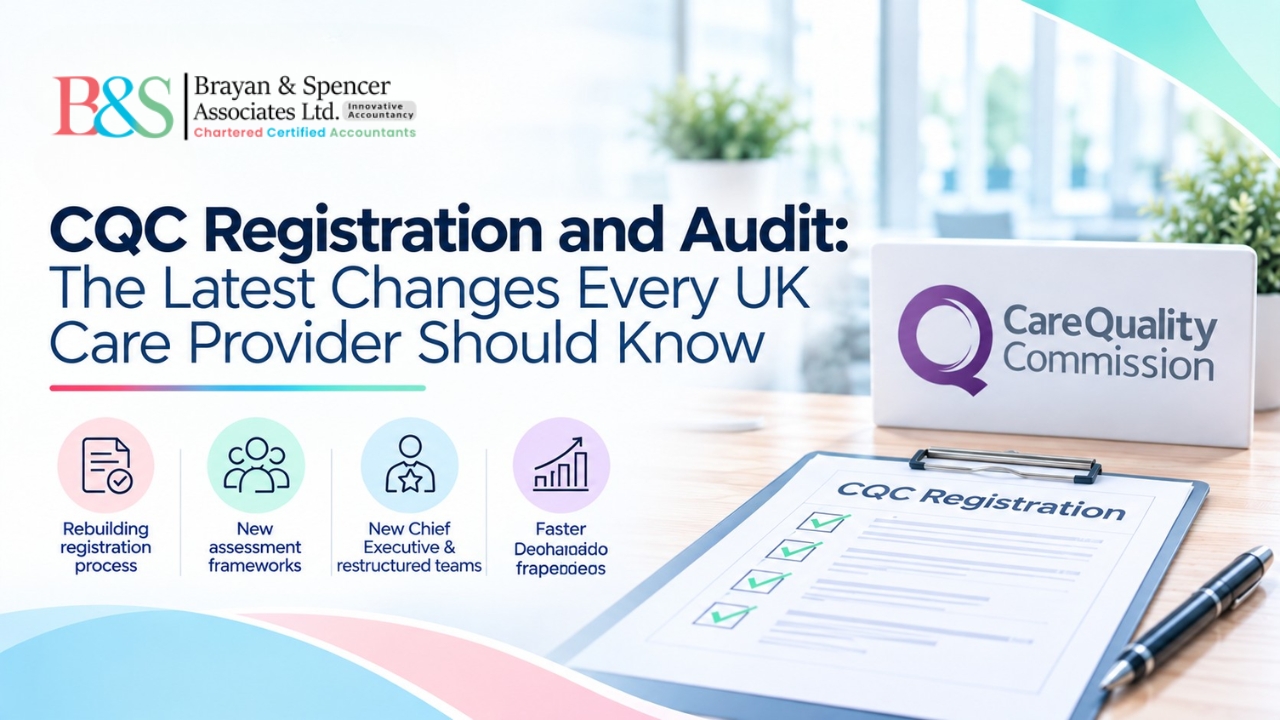
- CQC has publicly admitted it needed to rebuild its registration process, and has been actively fixing it
- New sector-specific assessment frameworks are still in consultation, not finalised
- A new CQC Chief Executive and restructured inspection teams are now in place
- CQC is targeting a much higher volume of completed assessments, clearing a long-running backlog
- Financial viability statements, usually accountant-signed, remain a common reason applications stall
CQC doesn’t usually admit when something isn’t working. So, when the regulator starts publishing regular updates with titles like “rebuilding CQC” and “how we’re working to improve,” it’s worth reading closely, not skimming past.
Over the past couple of years, CQC has been unusually open about a registration backlog, a stuck assessment process, and a framework so contested that the Care Provider Alliance was formally invited to review and critique it.
The result isn’t one single headline change. It’s a cluster of them, arriving together: a new Chief Executive, a registration process being actively rebuilt, sector-specific assessment frameworks moving through consultation, and a renewed push to clear the assessment backlog.
So, if you’re applying for registration soon, or you’ve been registered for years without checking in on any of these, you may be working from an outdated picture. Here’s a straight read of what CQC has said about itself, drawn from its own published updates, alongside the official government guidance on registering for CQC. If you need hands-on CQC inspection support or CQC compliance support while any of these settles, that’s exactly where a specialist adviser earns their fee.
A New Chief Executive, and a Regulator Mid-Rebuild
CQC recently appointed a new Chief Executive, following a period the regulator itself has openly described as needing to “rebuild.” That’s not criticism from an outsider. Its language CQC has used its own published improvement updates.
The regulator has also restructured its inspection function under four Chief Inspectors, each focused on a distinct area of sector expertise. That’s a shift away from a more generalist inspection model toward specialists who understand your specific corner of care.
For providers, change at this scale rarely stays contained to the top of an organisation. It tends to filter down into how quickly applications move, how consistently inspectors are trained, and how firmly new priorities get enforced. Worth watching. Not worth panicking over.
Registration Is Getting Faster, and CQC Says So Itself
One of the more useful admissions in CQC’s own updates is that its registration process had a backlog and fixing it has been an explicit priority.
CQC has stated it’s testing a simpler registration form, improving its online guidance, and working through stuck applications. It has also piloted a better registration process specifically for new homecare applications, with plans to extend that improved approach to other sectors.
The regulator reports recruiting more registration inspectors and seeing a steady month-on-month increase in completed registrations. Whether that translates into a noticeably faster experience for any individual applicant will vary. But the direction of travel, by CQC’s own account, is toward quicker, clearer registration decisions.
In practice, this means one thing for you: don’t assume the registration timelines quoted in older guides, even ones written only a year or two ago, still hold. CQC is actively trying to change them. For the fundamentals of the process itself, our earlier guide to CQC registration is still the right starting point; this article picks up where that one leaves off.
The Framework Overhaul Is Real, and It’s Still Mid-Consultation
CQC has confirmed it’s replacing its current single assessment approach with sector-specific frameworks: one for adult social care, mental health, primary care and community services, and hospitals. Draft versions are published for consultation, and CQC has said it’s piloting the new methodology with selected providers before wider rollout.
This matters differently depending on where you are in the process.
If you’re preparing a first-time application, you’re effectively applying under a framework CQC is actively revising underneath you. Leaning too heavily on rigid, quality-statement-by-quality-statement preparation risks investing in structure that’s partway through being replaced.
If you’re already registered, the same caution runs in reverse. Don’t assume your existing evidence of mapping will still line up cleanly once the sector-specific frameworks land.
CQC has been explicit that it’s still analysing consultation feedback and testing methodology. That’s why the safest approach right now is building genuinely strong evidence against the five key questions, Safe, Effective, Caring, Responsive, and Well-led, rather than memorising a structure that’s actively being redrawn.
The Financial Viability Requirement Nobody Talks About Enough
Buried inside CQC’s registration requirements is a document most new provider’s underestimate: the financial viability statement.
Since CQC introduced a more consistent approach to assessing this, applicants have needed to submit a statement, typically signed by a qualified accountant, demonstrating they have the resources to establish and sustain their service. Often, that includes a multi-year cash flow projection.
CQC isn’t asking whether your business will be profitable in the traditional sense. It’s asking whether you can keep the service safely running, staff paid, rent covered, insurance current, even though a slow start.
Applications regularly stall here. Not because providers lack funds, but because the financial evidence submitted is vague, unsigned, or built on assumptions, nobody could defend under scrutiny.
This is exactly the kind of requirement that benefits from being handled by someone who prepares financial statements professionally, rather than a care manager doing their best with a spreadsheet template. A financial viability statement that reads as credible to an accountant reads as credible to CQC too.
Fees Are Reviewed Regularly, and CQC Consults Before Changing Them
CQC’s fee scheme covers the full cost of registration, monitoring, and inspection. By CQC’s own account, fees only change following a public consultation.
Fees are also calculated individually against your specific service type and size, not applied as one flat number. That’s why any fee figure quoted online should be treated as a reference point, not a guarantee. The only reliable way to know your exact fee is CQC’s own fee calculator, or direct confirmation from CQC once your application details are known.
Why a CQC Compliance Audit Matters More Right Now
CQC has publicly stated it’s accelerating the pace of assessments, working toward a significantly higher target for completed assessments than in previous years, while clearing a backlog that had built up.
Practically, that means more services are being assessed than before. The gap between “haven’t heard from CQC in a while” and “next assessment” may be closing faster than providers expect.
Combine that with CQC’s continued use of data gathered between visits, notifications, complaints, workforce information, and one thing becomes clear: a quiet period doesn’t mean a low-risk period. If anything, an active backlog-clearing push is exactly when providers who haven’t reviewed their evidence recently are most likely to be assessed sooner than planned.
This is precisely the gap a proper CQC compliance audit is built to close. Rather than waiting to find out where you stand during a live inspection, an independent audit tests your service against the same evidence CQC itself would look for, before the assessment date is anywhere near confirmed.
Where Brayan & Spencer Associates fits into all of this
We support UK care providers through both sides of this changing landscape, offering CQC compliance support whether you’re heading toward your first registration or your next assessment.
For new applicants, our CQC registration support includes preparing financial viability statements as qualified accountants, exactly the kind of documentation CQC’s own guidance says applications frequently stall on. We also provide dedicated CQC inspection support in the run-up to a confirmed visit, so nothing is left to be assembled at the last minute.
For providers already registered, our CQC compliance audit services benchmark your evidence against where CQC’s frameworks and assessment priorities currently stand, not where they stood when you last checked.
Get advice grounded in what CQC is actually saying, not what a template says. Visit Brayan & Spencer Associates or call 0207 183 5956.
Frequently Asked Questions
Yes. CQC has published draft sector-specific assessment frameworks for adult social care, mental health, primary care and community services, and hospitals. It’s currently analysing consultation feedback and piloting the new methodology with selected providers ahead of wider rollout.
CQC says it’s actively working through a registration backlog, testing a simplified registration form, and recruiting more registration inspectors. It reports a steady increase in completed registrations. Providers should expect the process to differ from older guides written before these changes began.
It’s a document, usually signed by a qualified accountant, demonstrating that an applicant has sufficient resources to establish and sustain their service. It often includes a multi-year cash flow projection, and it’s a common reason for application to stall when the evidence submitted is vague or unsigned.
Yes, but only following a public consultation, according to CQC’s own fees of guidance. Fees are calculated individually based on service type and size rather than applied as a single flat figure, so always confirm your exact fee using CQC’s official fee calculator.
CQC has publicly set a target to significantly increase the volume of completed assessments as part of clearing an existing backlog. That means more services are likely to be assessed sooner than in recent years.