
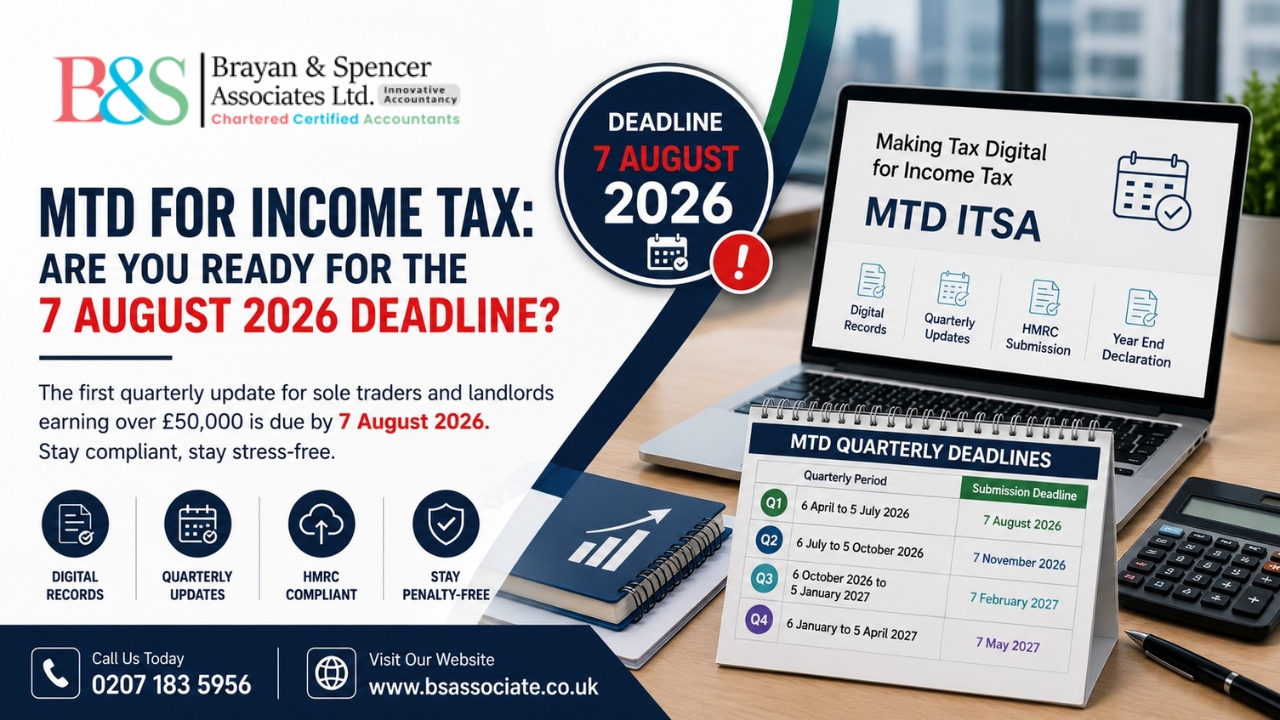
If you earn over £50,000 from self-employment or property, your first Making Tax Digital for Income Tax quarterly update is due by 7 August 2026. Here is what you need to do before that deadline arrives.
The Tax Reporting Change That Is Already in Effect
Since 6 April 2026, Making Tax Digital for Income Tax (MTD ITSA) has been live and mandatory for sole traders and landlords with combined gross income from self-employment and UK property exceeding £50,000. This is not a plan or a pilot. It is your new legal obligation, and the first quarterly deadline is almost here.
The first quarterly period ran from 6 April to 5 July 2026, with the submission deadline on 7 August 2026. Miss it, and you earn a penalty point under HMRC’s new Late Submission Penalty regime. Accumulate four points and a £200 fine follows automatically.
Quarterly Tax Returns UK-style means no more annual “shoebox of receipts” routine. Your financial records must now be organised, digital, and ready for submission four times a year. If your bookkeeping has been running behind, or if you are still using spreadsheets or paper folders, the next few weeks are critical.
At Brayan & Spencer Associates, we are already helping sole traders, landlords, and freelancers prepare for HMRC MTD Compliance, including providing free accounting software support to make the transition as smooth as possible. Call us on 0207 183 5956 or visit www.bsassociate.co.uk to get started today.
What Is MTD for Income Tax and Who Does It Affect?
Making Tax Digital for Income Tax replaces the traditional once-a-year Self Assessment return with a system of quarterly digital updates and a final year-end declaration. Here is who is currently in scope:
- From April 2026: Sole traders and landlords with combined gross income above £50,000
- From April 2027: The threshold drops to £30,000, bringing in a significantly larger group
- From April 2028: Extended further to those earning above £20,000
If your combined gross income from self-employment and UK property on your 2024/25 Self Assessment return exceeded £50,000, you are already mandated. You cannot opt out, delay, or continue with your old annual filing routine.
Under MTD for Income Tax, eligible businesses must now:
- Maintain digital records of all income and expenses
- Use HMRC-compatible accounting software for every submission
- Submit four quarterly updates per tax year, each within one month of the period ending
- Complete an End of Period Statement and a Final Declaration by 31 January following the tax year
This is not simply submitting tax online. It is a structural change to how you manage your finances throughout the year.
The Four HMRC Quarterly Deadlines for 2026/27
Under Digital Tax Reporting UK rules, every taxpayer within scope follows the same standardised quarterly calendar, regardless of their accounting period. For the 2026/27 tax year, the deadlines are:
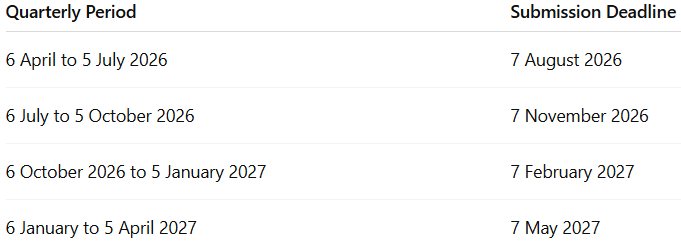
One clarification many businesses miss: a quarterly update is not a full tax return and it does not trigger a tax payment. It is a digital summary of income and expenses for that three-month period, think of it as a regular progress report rather than a year-end reckoning. Your actual tax payment dates of 31 January and 31 July remain unchanged.
What has changed is that you must complete all four quarterly updates before you can file your Final Declaration at year end. Falling behind at any stage creates a backlog that becomes progressively harder to resolve.
Why the 7 August Deadline Is Harder Than It Looks
HMRC has confirmed a soft landing for the 2026/27 tax year. However, businesses should still prepare early.
Many Businesses Are Still Unprepared
Research suggests many sole traders and landlords still have not signed up for MTD.
Common reasons include:
Poor digital record keeping
No compatible software
Delayed bookkeeping
Software Setup Takes Longer Than Expected
Businesses often underestimate the time needed to:
Fix bookkeeping gaps
Connect bank feeds
Categorise transactions
Configure MTD software
Spreadsheets Create Compliance Problems
Many businesses still rely on spreadsheets or paper records.
However, standalone spreadsheets cannot submit directly to HMRC without bridging software.
Common MTD Pitfalls Accountants Are Seeing Right Now
Having worked with sole traders, landlords, and growing businesses across London and the UK, the team at Brayan & Spencer Associates has seen the same issues appear repeatedly as businesses enter the MTD ITSA era.
Bookkeeping that is months behind. Quarterly reporting requires records to be current, not reconstructed. If your last bookkeeping update was in January, catching up to July in a way that satisfies HMRC is a serious undertaking.
Wrong software choices. Not every accounting platform is MTD-compatible. Standalone spreadsheets, even well-maintained ones, cannot submit to HMRC’s API directly. You need HMRC-recognised software, and choosing the wrong one wastes both time and money.
No bank feeds connected. MTD-compatible software works best when linked to live bank feeds, pulling transactions automatically. Setting this up after the quarter has passed means manual data entry, a higher risk of errors, and more time spent on compliance.
Confusion between quarterly updates and tax returns. Many clients initially believe they owe tax each quarter. A quarterly update is an information report. It gives HMRC a running picture of your position, but no payment is due at these stages.
Disorganised expense records. Missing receipts, unclear categories, and personal versus business confusion are the most common causes of submission errors. Under MTD for Income Tax, each expense entry needs to be categorised and stored digitally rather than reconstructed from memory at year end.
Why HMRC Quarterly Updates Are an Opportunity, Not Just a Burden
It is easy to focus only on the compliance requirement, but businesses that adopt HMRC Quarterly Updates properly often discover genuine benefits. When your financial records are genuinely current and digital, you gain visibility you never had before.
Businesses with well-maintained MTD-compliant records report a clearer picture of cash flow throughout the year, earlier visibility of potential tax liabilities giving more time to plan or save, faster access to year-end numbers reducing accountancy fees, cleaner data for conversations with lenders and advisors, and a reduced risk of HMRC enquiries caused by errors or inconsistencies.
Making Tax Digital for Income Tax is, at its core, an attempt to shift the UK tax system from an annual retrospective exercise to something closer to real-time financial management. Businesses that build good habits now will find quarterly reporting far less disruptive than those who treat each deadline as an emergency.
How Brayan & Spencer Associates Help You Stay HMRC Compliant
At Brayan & Spencer Associates, we have been supporting businesses through this transition with practical, jargon-free guidance built around real compliance needs.
Our MTD support includes reviewing your 2024/25 Self Assessment figures to confirm your qualifying income and explain exactly when MTD applies to your situation. We help you identify the right HMRC-compatible software for your business size, and as part of our client support we provide free accounting software assistance to help you set up digital records correctly from the start.
For clients who prefer a fully managed service, we prepare and submit quarterly updates on your behalf, keeping all deadlines handled throughout the year. We also ensure your End of Period Statement and Final Declaration are completed accurately, with all necessary tax adjustments, allowances, and reliefs applied correctly.
Beyond submissions, we help clients build the record-keeping habits that make quarterly compliance straightforward rather than stressful, covering transaction categorisation, receipt management, and digital record storage.
What to Do Before 7 August 2026: A Practical Action Plan
Step 1: Confirm your scope. Check your 2024/25 Self Assessment return. If your combined gross income from self-employment and UK property exceeded £50,000, you are mandated from April 2026.
Step 2: Choose compatible software. HMRC publishes a list of approved MTD-compatible providers. Free options exist for simple cases, but most businesses benefit from a paid platform with bank feed integration and accountant access.
Step 3: Register with HMRC. You must actively sign up through your Government Gateway account. HMRC does not enrol you automatically when your income crosses the threshold.
Step 4: Connect your bank feeds. Link your business accounts to your software so transactions from 6 April 2026 onwards are captured automatically.
Step 5: Organise your recordsEnter or import all income and expense transactions for 6 April to 5 July 2026, correctly categorised, before the submission window closes.
Step 6: Submit by 7 August. Your quarterly update goes through your software, not directly through HMRC’s website. If you want your accountant to submit on your behalf, you must authorise them through the software first.
If any of these steps feel unclear or you are starting later than planned, contact Brayan & Spencer Associates now. The closer you get to 7 August without a compliant setup in place, the more complex the catch-up becomes.
Act Before the Deadline, Not After
Making Tax Digital for Income Tax is not another administrative footnote. It is the most significant structural change to UK income tax reporting in decades, and the first real deadline is almost here.
Sole traders and landlords with qualifying income above £50,000 are already in scope. The first quarterly period has closed. The 7 August 2026 submission deadline is fixed, and preparation takes time.
At Brayan & Spencer Associates, we make MTD compliance straightforward. Whether you need help choosing the right software, catching up on digital records, or having your quarterly updates fully managed, our team is ready to support you.
📞 Call us today: 0207 183 5956 🌐 Visit: www.bsassociate.co.uk
Get practical support for HMRC quarterly reporting, digital bookkeeping, and MTD compliance before the next deadline arrives.
Frequently Asked Questions About MTD for Income Tax
The 7 August 2026 deadline marks the first quarterly reporting date under the new Making Tax Digital for Income Tax rules. If you fall within the initial group required to join MTD, this is the first time HMRC expects a digital summary of your business or property income for the new tax year.
No. A quarterly update is simply a progress report that gives HMRC a snapshot of your income and expenses. It does not calculate your final tax liability or require an immediate payment. Your normal Income Tax payment schedule continues separately.
HMRC has introduced a compliance system that records missed filing obligations. While the first year is intended to help taxpayers transition into digital reporting, repeated late submissions could lead to penalties once the introductory period ends. Staying on top of deadlines is the best way to avoid future issues.
The first stage of the rollout applies to individuals whose income from self employment, rental properties, or both exceeds the qualifying threshold set by HMRC. Additional groups will be brought into the scheme during later phases of implementation.
Traditional record keeping methods may no longer meet the digital requirements of the new system. Businesses and landlords are expected to maintain digital records and use software capable of sharing information with HMRC in the required format.