If you are a sole trader or landlord in the UK, there is a good chance you have already received emails, software alerts, or HMRC letters about Making Tax Digital for Income Tax (MTD for IT).
And for many taxpayers, the first reaction has been:
“What exactly am I supposed to do now?”
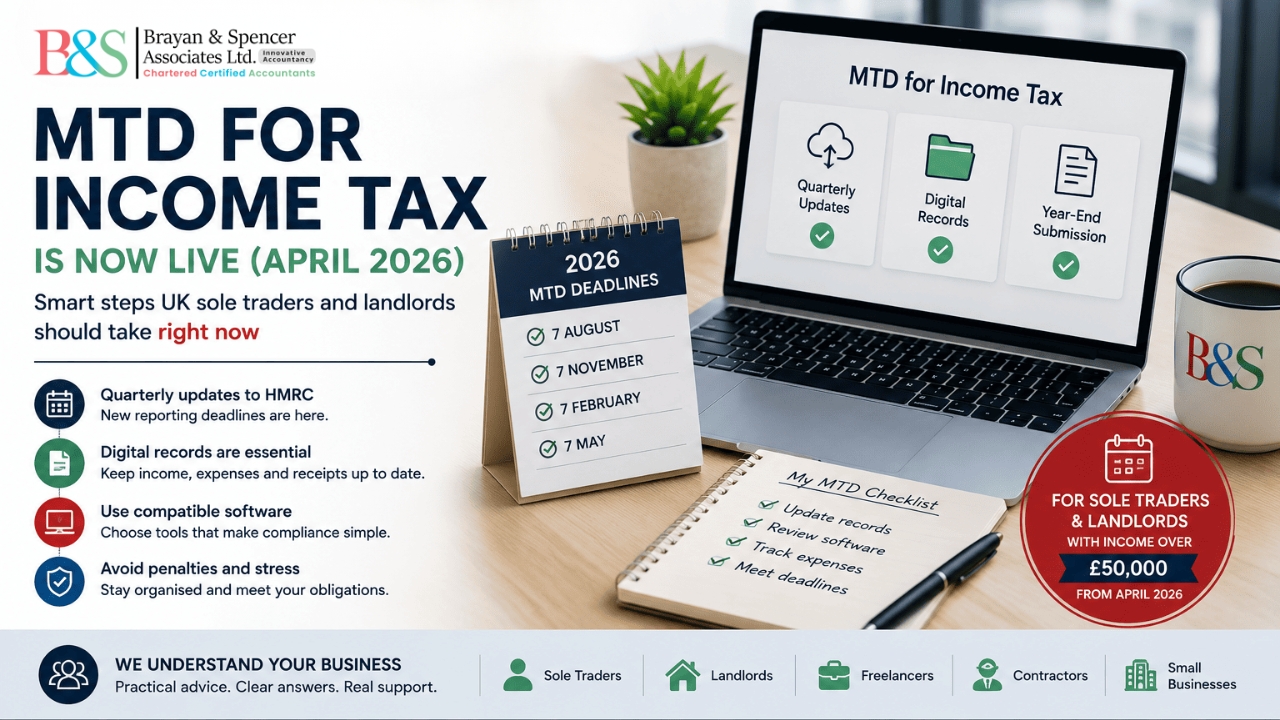
Since April 2026, eligible sole traders and landlords earning over £50,000 from self employment or property income are now required to follow the new MTD rules.
But here is the reality most businesses are discovering:
MTD is not just about filing tax returns online.
It changes how you:
- keep records
- manage bookkeeping
- report income
- track expenses
- submit updates to HMRC throughout the year
At Brayan & Spencer Associates, we are already helping UK landlords, freelancers, contractors, and sole traders deal with practical MTD issues including bookkeeping gaps, software confusion, missed records, and quarterly reporting pressure.
This guide explains the real world MTD problems businesses are facing in 2026 and what you should do now to stay organised and compliant.
Why Many Sole Traders Are Struggling With MTD in 2026
One of the biggest misconceptions about Making Tax Digital is that it is “just another online tax return.”
It is not.
The biggest change is the reporting routine.
Under the old system, many businesses could:
- ignore bookkeeping for months
- sort receipts once a year
- rush everything before January deadlines
That approach does not work well under quarterly reporting.
We are already seeing businesses struggle because:
- expenses are missing
- records are incomplete
- bank transactions are not categorised
- spreadsheets are messy
- rental income is mixed with personal spending
- bookkeeping is months behind
MTD exposes weak bookkeeping systems very quickly.
Received an HMRC MTD Letter? Here’s What You Should Check First
A lot of taxpayers are still unsure whether MTD actually applies to them.
For April 2026, MTD for Income Tax generally applies to:
- sole traders
- self employed individuals
- landlords
…with qualifying income over £50,000.
Your qualifying income may include:
- self employment income
- UK rental income
- foreign property income
One important detail many people miss is this:
The threshold is based on gross income, not profit.
That means even businesses with lower profits could still fall within the rules if turnover exceeds the threshold.
Still Using Spreadsheets for MTD? Here’s the Real Issue
Many business owners panic and assume spreadsheets are completely banned under MTD.
That is not entirely true.
The real issue is whether your records:
- stay digital
- remain accurate
- work with compatible software
- avoid manual errors
The problem is usually not the spreadsheet itself.
The problem is:
- manual copying between systems
- broken formulas
- inconsistent categories
- missing receipts
- incomplete records
Some businesses continue using spreadsheets successfully with proper MTD compatible solutions.
Others discover their old system only worked because everything was corrected manually once a year.
Landlords Are Facing Bigger MTD Problems Than Expected
Many landlords assumed MTD would be simple because they only have a few properties.
In reality, landlords are some of the taxpayers facing the biggest bookkeeping issues right now.
Especially where they have:
- multiple rental properties
- overseas property income
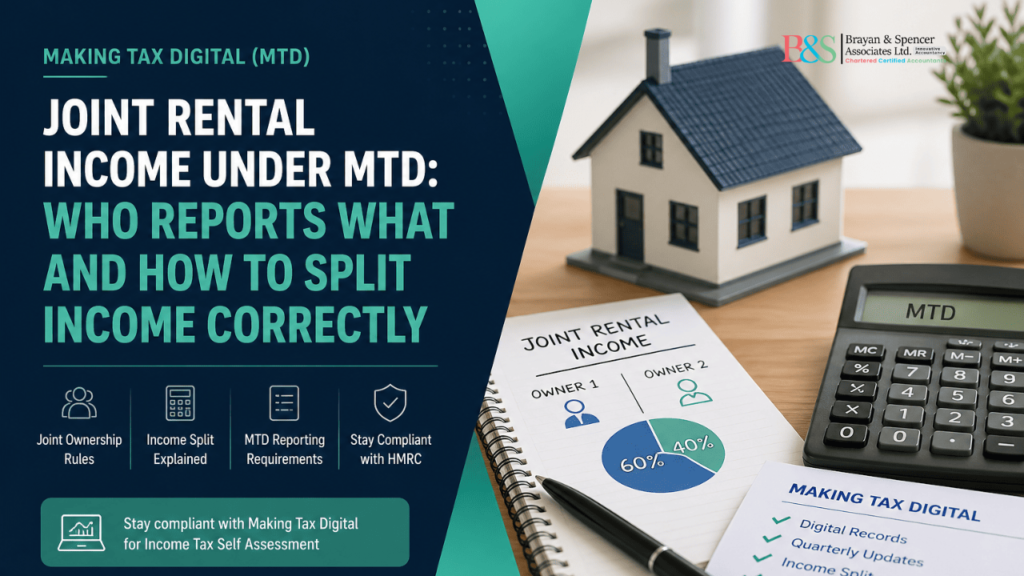
- jointly owned properties
- self employment income alongside rental income
- poor separation between personal and rental expenses
One of the biggest mistakes we are seeing is landlords using one personal account for everything.
This creates:
- messy records
- missing expense categories
- reconciliation problems
- reporting delays
The cleaner your rental bookkeeping becomes now, the easier future quarterly submissions will be.
What Happens If Your Bookkeeping Is Already Behind?
This is one of the most common questions businesses are asking in 2026.
Many sole traders delayed preparation because they expected:
- another HMRC delay
- software providers to simplify everything automatically
- penalties to be relaxed completely
Now they are trying to catch up quickly.
If your bookkeeping is behind, focus on fixing the foundation first.
A practical approach is:
- Separate business and personal transactions
- Organise bank statements properly
- Categorise expenses correctly
- Bring records up to date month by month
- Move towards monthly bookkeeping reviews
Trying to repair an entire year of records in one weekend usually creates more stress and more mistakes.
Choosing the Right MTD Software Matters More Than Price
Many businesses rushed into software subscriptions before April 2026 and are already changing systems again.
The cheapest software is not always the best option.
Good MTD compatible accounting software should help you:
- track income properly
- manage expenses easily
- organise landlord records
- store digital documents
- submit quarterly updates
- simplify year end reporting
The right setup depends on your business type.
For example:
- landlords often need better property tracking
- freelancers may prefer simpler bookkeeping systems
- businesses with multiple income streams need stronger reporting features
Software should make bookkeeping easier, not more complicated.
Common MTD Mistakes We Are Seeing in 2026
At Brayan & Spencer Associates, some of the most common MTD mistakes we are currently helping clients fix include:
- Mixing Personal and Business Spending
This creates confusion during quarterly reporting.
- Missing Expense Evidence
Businesses often have transactions without proper invoices or receipts.
- Leaving Bookkeeping Until Deadline Week
Quarterly reporting becomes stressful very quickly.
- Using Incorrect Income Categories
Poor categorisation can create reporting inaccuracies.
- Assuming Software Does Everything Automatically
Software still needs accurate input and regular reviews.
- Ignoring MTD Letters From HMRC
Delaying action usually creates bigger problems later.
What Smart Businesses Are Doing Differently Under MTD
The businesses handling MTD most smoothly are usually doing a few things consistently.
- They Update Records Monthly
Not once a year.
- They Separate Business Finances Properly
Especially landlords and freelancers.
- They Store Records Digitally
Invoices and receipts are easy to access.
- They Review Reports Regularly
This reduces surprises before quarterly deadlines.
- They Ask for Professional Advice Early
Fixing systems now is easier than repairing years of poor records later.
How Brayan & Spencer Associates Can Help With MTD
At Brayan & Spencer Associates, we help:
- sole traders
- freelancers
- landlords
- contractors
- startups
- small businesses
- individual taxpayers
Our team can help you:
- understand whether MTD applies to you
- organise digital bookkeeping
- review your current records
- choose suitable MTD compatible software
- separate business and rental income correctly
- prepare for quarterly reporting
- catch up on overdue bookkeeping
Whether you currently use spreadsheets, accounting software, or manual records, we can help simplify the transition.
📞 Call 0207 183 5956
🌐 Visit Brayan & Spencer Associates
Final Thoughts
Making Tax Digital is no longer something businesses can simply “prepare for later.”
For many UK sole traders and landlords, it is already affecting how bookkeeping and tax reporting work in day to day business operations.
The businesses finding MTD easiest are not necessarily the biggest businesses.
They are usually the ones with:
- cleaner records
- better bookkeeping habits
- organised systems
- consistent reporting routines
If you are unsure whether your current setup is actually MTD ready, now is the right time to review it before small bookkeeping issues become larger compliance problems later.
Frequently Asked Questions About MTD for Income Tax
Ans: If your qualifying income exceeds the MTD threshold and you fall within the rollout dates, you will generally need to follow MTD rules and use compatible software.
Ans: In some cases, yes. However, spreadsheets usually need to work alongside compatible MTD software and proper digital record keeping processes.
Ans: HMRC may apply penalties or interest depending on the situation. Even during transitional easements, businesses are still expected to maintain proper digital records and submit updates correctly.
Ans: No. MTD now affects many sole traders, freelancers, and landlords, including smaller businesses that meet the income threshold.
Ans: No. The April 2026 rollout mainly affects sole traders and landlords, not limited companies.
Ans: No. Many businesses are currently catching up. The earlier you organise your records and reporting process, the easier future quarterly submissions will become.