
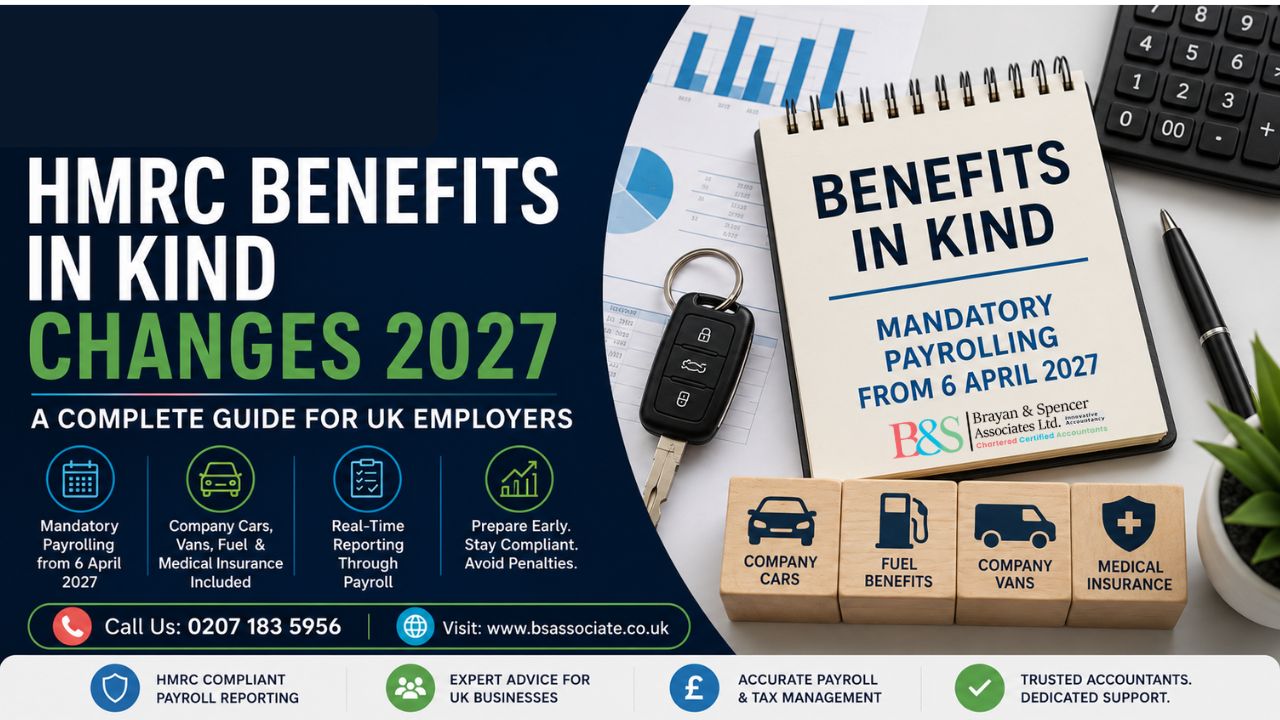
HMRC is changing how employers report and tax Benefits in Kind (BiKs). From 6 April 2027, mandatory payrolling will replace the traditional reporting process for many employee benefits, requiring employers to report taxable benefits through payroll in real time instead of relying primarily on annual P11D forms.
Although the implementation date has been delayed giving businesses more time to prepare, employers should not wait until the last minute. Updating payroll systems, reviewing employee benefits, and understanding the new reporting requirements now can help reduce compliance risks and ensure a smooth transition.
Whether you run a small business, a growing company, or a large organisation, these changes could affect your payroll processes, employee tax reporting, and PAYE obligations.
In this guide, our payroll and tax specialists explain everything you need to know about HMRC’s mandatory payrolling of Benefits in Kind, including who it affects, the benefits covered, implementation timelines, employer responsibilities, and practical steps to prepare before April 2027.
What Is Mandatory Payrolling Benefits in Kind?
Benefits in Kind (BiKs) are non-cash benefits that employers provide to employees in addition to their salary or wages. These benefits often include company cars, private medical insurance, fuel for private use, employer-provided vans, accommodation, and other taxable perks.
Under the current system, employers generally report taxable benefits at the end of each tax year using P11D and P11D(b) forms. HMRC then adjusts an employee’s tax code so that any tax due is collected over time.
From 6 April 2027, HMRC will introduce mandatory payrolling for many Benefits in Kind. Instead of waiting until the end of the tax year, employers will report eligible taxable benefits through their payroll each pay period using the Real Time Information (RTI) system. This means employees will pay the correct amount of Income Tax as they receive the benefit, helping reduce future tax code adjustments.
The change forms part of HMRC’s wider digital transformation programme, designed to improve payroll accuracy, simplify tax reporting, and reduce administrative burdens over time.
Why Has HMRC Introduced These Changes?
HMRC’s objective is to modernise payroll reporting and improve the accuracy of PAYE tax collection.
Under the existing process, many employees discover changes to their tax code months after receiving taxable benefits, which can lead to unexpected tax bills or underpayments. Mandatory payrolling aims to reduce these issues by ensuring tax is collected during the tax year rather than after it has ended.
Following extensive consultation with employers, payroll professionals, software developers, and industry bodies, HMRC decided to delay the original implementation date to allow businesses more time to prepare. The revised timetable provides employers with additional time to review systems, train payroll teams, and implement necessary software updates before the new rules become compulsory.
Which Benefits Are Included from April 2027?
HMRC has confirmed that Phase 1 of mandatory payrolling will apply to several commonly provided employee benefits.
These include:
- Company cars
- Company car fuel for private use
- Employer provided vans
- Van fuel benefits
- Employer funded private medical insurance and healthcare benefits
These benefits will generally need to be reported through payroll instead of the traditional annual P11D process.
Some Benefits in Kind will continue to follow the existing reporting arrangements during the transition period. HMRC has indicated that additional benefits are expected to move into mandatory payrolling from April 2028, subject to further guidance and technical readiness.
Benefits such as beneficial loans and employer-based accommodation are expected to remain outside the mandatory regime for the time being.
Who Needs to Prepare for Mandatory Payrolling?
These changes affect far more businesses than many employers realise.
You should begin preparing if your business:
- Employs staff who receive taxable Benefits in Kind
- Provides company cars or vans
- Offers private medical insurance or healthcare benefits
- Pays for employees’ private fuel
- Operates PAYE payroll
- Files P11D forms each year
- Has directors receiving taxable employee benefits
- Uses payroll software for HMRC submissions
Even if your business only provides one taxable benefit, reviewing your payroll procedures now can help avoid unnecessary compliance issues later.
Professional payroll support is particularly valuable for businesses with multiple employee benefits or complex remuneration packages, as reporting errors can result in incorrect tax calculations and additional administrative work.
Benefits of Preparing Early
Although mandatory payrolling does not become compulsory until April 2027, early preparation offers significant advantages.
Improve Payroll Accuracy
Reviewing employee benefits in advance allows employers to identify inconsistencies and ensure payroll records remain accurate before the new reporting requirements begin.
Reduce Compliance Risks
Understanding which benefits must be reported through payroll helps minimise the risk of incorrect submissions, late reporting, or HMRC enquiries.
Easier Employee Tax Management
Employees are more likely to pay the correct amount of tax throughout the year rather than experiencing unexpected adjustments to their tax codes after the tax year has ended.
Better Payroll Efficiency
Updating payroll software and internal processes before implementation helps reduce disruption when the mandatory rules take effect.
Stronger Business Planning
Preparing early gives payroll teams, HR departments, and business owners sufficient time to review employee benefits, allocate responsibilities, and communicate upcoming changes to staff.
How Mandatory Payrolling Works: Step by Step
Understanding the reporting process now will make implementation much easier when the new rules become mandatory.
Step 1 – Review Existing Employee Benefits
Create a complete list of all taxable and non-taxable employee benefits currently provided across your business.
Step 2 – Identify Benefits Covered by HMRC’s New Rules
Determine which benefits will fall within the mandatory payrolling regime from April 2027 and which will continue under existing reporting requirements.
Step 3 – Assess Your Payroll Software
Speak with your payroll software provider to confirm your system will support mandatory Benefits in Kind reporting and Real Time Information submissions.
Step 4 – Update Payroll Processes
Review internal procedures for collecting benefit information, calculating taxable values, and reporting benefits during each payroll cycle.
Step 5 – Train Payroll and HR Teams
Ensure staff responsible for payroll administration understand the new reporting requirements and any operational changes.
Step 6 – Communicate with Employees
Inform employees how the changes may affect their payslips and explain why tax deductions may appear differently once mandatory payrolling begins.
Step 7 – Monitor Compliance
Regularly review payroll reports and benefit records to ensure ongoing compliance with HMRC reporting obligations.
Documents and Information Employers Should Prepare
Although mandatory payrolling does not introduce a formal application process, employers should ensure their payroll records are accurate and up to date before implementation. Having the right information available will help reduce reporting errors and make the transition smoother.
You should review and organise:
- Employee payroll records
- PAYE reference details
- National Insurance numbers
- Company car and van benefit information
- Private fuel benefit records
- Employer funded medical insurance details
- Existing P11D and P11D(b) records
- Employee benefit agreements
- Payroll software configuration
- Internal payroll procedures
Keeping these records updated throughout the tax year will make real time reporting more accurate and reduce administrative pressure.
Mandatory Payrolling Timeline
Understanding the implementation timetable allows businesses to prepare well before the mandatory deadline.
| Date | What Happens |
| During 2026 | HMRC continues publishing technical guidance and software specifications. |
| Late 2026 | Payroll software providers begin rolling out updates. |
| 6 April 2027 | Mandatory payrolling starts for selected Benefits in Kind. |
| 6 July 2027 | P11D reporting continues for benefits that remain outside mandatory payrolling. |
| From April 2028 | HMRC expects to extend mandatory payrolling to additional taxable benefits, subject to future confirmation. |
Rather than waiting until the final months before implementation, employers should begin reviewing payroll processes as early as possible.
Common Mistakes Employers Should Avoid
Many payroll compliance issues occur because businesses assume the new reporting rules will automatically fit into their existing payroll process. Early planning can help avoid these common mistakes.
Waiting Until 2027
Leaving preparations until implementation begins may create unnecessary pressure on payroll teams and increase the likelihood of reporting errors.
Assuming P11D Reporting Will End Completely
Mandatory payrolling does not immediately replace every P11D requirement. Some benefits will still require separate reporting during the transition period.
Not Reviewing Employee Benefits
Many businesses provide taxable benefits without regularly reviewing how they are reported. A full review helps identify which benefits are affected.
Ignoring Payroll Software Updates
Older payroll systems may require updates or configuration changes to support the new reporting requirements.
Poor Employee Communication
Employees may notice changes to their monthly tax deductions. Explaining these changes in advance can reduce confusion and unnecessary queries.
Does Mandatory Payrolling Increase Tax?
No.
The amount of tax payable on Benefits in Kind generally remains the same. What changes is when the tax is collected.
Instead of HMRC adjusting an employee’s tax code after the end of the tax year, Income Tax will usually be collected through payroll as the benefit is provided.
For many employees, this creates a more accurate tax position and reduces the likelihood of unexpected tax adjustments later.
How Brayan & Spencer Associates Can Help Your Business
Preparing mandatory payroll involves more than simply updating payroll software. Employers need to review benefit arrangements, understand reporting obligations, ensure payroll accuracy, and keep up with HMRC guidance.
At Brayan & Spencer Associates, we support businesses across the UK with practical payroll and tax compliance solutions tailored to their needs.
Our services include:
- Payroll management
- PAYE compliance
- Benefits in Kind reporting
- P11D and P11D(b) support
- Employer tax advice
- Payroll software guidance
- HMRC compliance reviews
- Employment tax planning
- Business accounting services
Whether you employ a small team or manage a larger workforce, our experienced accountants and payroll specialists can help you prepare for the upcoming changes with confidence while reducing compliance risks.
Final Thoughts
Mandatory payrolling of Benefits in Kind represents one of the most significant payroll reporting changes for UK employers in recent years. Although implementation has been delayed until April 2027, businesses should use this additional time to review employee benefits, update payroll systems, and strengthen internal processes.
Early preparation can reduce compliance risks, improve payroll accuracy, and help employers adapt to the new reporting requirements with minimal disruption. Whether your business provides company cars, medical insurance, fuel benefits, or other taxable employee benefits, understanding your obligations now will make the transition much smoother.
Need Expert Payroll & Tax Support?
Keeping up with HMRC changes can be challenging, but you don’t have to manage them alone.
Brayan & Spencer Associates provides professional payroll, accounting, and tax advisory services for businesses and individuals across the UK. Our experienced team can help you review your Benefits in Kind reporting, improve payroll compliance, and prepare your business for mandatory payrolling with confidence.
📞 Call us today: 0207 183 5956
🌐 Visit: https://www.bsassociate.co.uk/
Book a consultation today and let our experts help your business stay compliant with the latest HMRC requirements while keeping your payroll processes efficient and accurate.
Frequently Asked Questions
Mandatory payrolling for selected Benefits in Kind is scheduled to begin on 6 April 2027.
The first phase includes company cars, company van benefits, fuel benefits for private use, and employer funded private medical insurance.
No. During the transition period, employers will still need to submit P11D forms for certain benefits that remain outside mandatory payrolling.
No. Mandatory payrolling changes the timing of tax collection rather than the overall tax liability.
Yes. Any employer providing taxable employee benefits should begin reviewing payroll processes well before April 2027.
Yes. Directors who receive taxable Benefits in Kind are generally affected in the same way as other employees.