Starting a travel company is exciting. You have begun shaping your business idea, identified potential suppliers and worked out which customers you want to reach. Then someone mentions the ATOL licence, and the paperwork suddenly feels very real.
If you plan to sell flight-inclusive holidays to UK customers, ATOL is something you need to understand early. The application is not just a form. It touches your accounts, your bank, your bonding arrangements and the way your business is structured. That is where good ATOL application support makes a real difference.
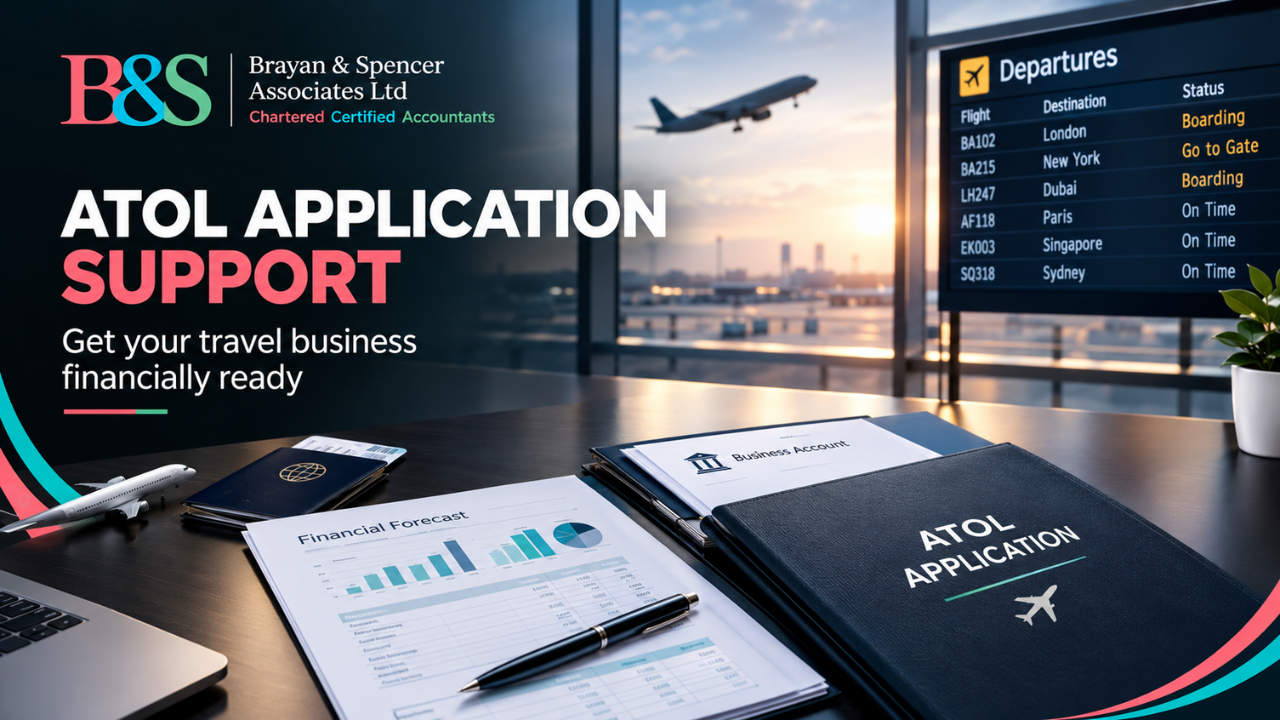
Brayan & Spencer Associates Ltd provides ARA (ATOL Reporting Accountant) services and recently supported a client through the process of obtaining an Air Travel Organiser’s Licence from the UK Civil Aviation Authority (CAA). The experience highlighted several important considerations for businesses preparing to enter the travel industry, which are worth understanding before starting an application.
What Is an ATOL Licence and Who Needs One?
ATOL stands for Air Travel Organiser’s Licence. It is a licensing and financial protection scheme run by the CAA. It exists so that customers who book certain air holidays are protected if the travel company that sold them fails.
In broad terms, if your business sells flight-inclusive packages or arranges flights as part of a holiday for UK customers, you may need to hold an ATOL. Not every travel business does. Some only sell accommodation, and some operate in ways that fall outside the scheme. The CAA sets the rules, so always check its guidance for your specific model.
If you are unsure where you stand, speak to us early. We can help you organise the questions you need to ask before you commit time and money to an application.
Why the Financial Side of an ATOL Application Matters
Many first-time applicants focus on the operational side. They think about suppliers, websites and booking systems. Those things matter, but the CAA also wants to see that your business is financially sound and properly set up.
A strong application usually depends on a few connected pieces:
- Clear, accurate financial information about the business and its owners
- A business bank account that is in place and working
- Financial bonds arranged to meet the requirements
- Sensible forecasts that reflect how the business will actually trade
- Organised records that can be produced quickly when questions come up
None of these sit in isolation. A delay with the bank account can hold up the bond. A weak forecast can raise questions about the whole application. This is why preparing everything together tends to work better than tackling each item one at a time.
How Our Accountants Help With ATOL Application Support
Our recent client is a good example. They secured the ATOL licence, opened a business bank account and put the required financial bonds in place. That was a real milestone for them.
We did not do it by working on one piece and hoping the rest would follow. We approached the financial and administrative work as a single, organised project. In practice, that means we:
- Talk through your proposed travel business and how it will operate
- Identify the financial information the application will need
- Help you prepare and present that information clearly
- Support the coordination between your application, bank account and bonding
- Keep the process moving so it does not stall at the paperwork stage
Running a new company is already a lot. You are dealing with suppliers, marketing, customers and legal set-up. Having a team that handles the financial groundwork frees you to concentrate on building the business itself.
The Real Value of Preparing Everything Together
Here is something we see often. A business owner starts the ATOL application, then realises halfway through that the bank account is not ready. Or they arrange a bond before their figures are properly prepared and have to go back and revisit things.
When the application, the bank account and the bonding arrangements are planned together, you avoid a lot of that back and forth. You know what is needed, you know who is doing what, and you can see how long the whole process is likely to take.
That clarity is valuable, especially if you have a launch date in mind or investors waiting for progress. It also helps you make better decisions. If the requirements show your plans need adjusting, you find out early, when changes are cheaper and easier.
Setting Up a Travel Business in the UK: What to Plan Early
An ATOL application sits inside a bigger picture. Before you apply, it helps to think through the wider set-up of your company. Our accountants and tax specialists in London can help you consider:
Business structure. Most travel start-ups operate as limited companies. The right structure affects your tax position, your liability and how you present to the CAA.
Tax registration. Depending on your turnover and the way you sell, you will need to think about VAT, corporation tax and payroll. Travel has its own VAT considerations, so take proper advice rather than guessing.
Bookkeeping and records. Clean records from day one make everything easier, from the ATOL application to your first annual accounts.
Cash flow. Travel businesses often take customer payments well before they pay suppliers, or the other way round. Understanding your cash flow helps you plan sensibly and present a credible forecast.
Ongoing compliance. Holding an ATOL is not a one-off event. There are continuing obligations, so it pays to set up good habits early.
If you want broader support for your company finances, our tax advisers in London can look after accounts, tax returns and planning alongside your licence work. You can see the full range on our accountant and tax specialist in London page.
What to Do Before You Contact an Accountant About ATOL
You do not need to have everything ready before you call us. But a little preparation helps the first conversation go further. It is useful to think about:
- What type of travel products you plan to sell and to whom
- Who the directors and owners of the business will be
- Whether the company is already registered or still being set up
- What your expected start date and early trading volumes look like
- Whether you already have a business bank account
If you cannot answer some of these yet, that is fine. We can work through them together and agree what needs to happen first.
Why Choose a Local Accountant for Your ATOL Application?
You can find general information about ATOL online, and you should read the CAA’s own guidance. But information is not the same as support. A licence application involves real decisions about your money, your company and your future.
Working with accounting services in London that understand both the numbers and the practical process gives you a partner rather than just a website to read. At Brayan & Spencer Associates Ltd, we can discuss your proposed business, assess the support you need and agree a clear scope of work for your application.
ATOL licences are granted by the Civil Aviation Authority. Application support does not guarantee approval, and every application is subject to the CAA’s assessment and requirements. What we can do is help you organise the financial and administrative work involved so your application is prepared clearly and professionally.
Ready to Start Your ATOL Application?
If you are setting up a UK travel company or preparing to apply for an ATOL licence, early planning saves time, stress and money.
At Brayan & Spencer Associates Ltd, we will discuss your proposed business, assess the support you need and agree a clear scope of work for your application. Whether you are starting from scratch or expanding an existing travel business, we are ready to help.
Call us on 0207 183 5956 or visit www.bsassociate.co.uk to book a conversation with our team.
Frequently Asked Questions About ATOL Application Support
An ATOL, or Air Travel Organiser’s Licence, is granted by the UK Civil Aviation Authority. It provides financial protection for customers who book certain air holidays with UK travel businesses, so they are covered if the company fails.
No. Whether you need one depends on how your business sells and what it sells. Companies that sell flight-inclusive packages or arrange flights as part of a holiday for UK customers may
need to be licensed. The CAA sets the rules, so check its guidance or speak to an adviser about your model.
An accountant can help with the financial and administrative work behind the application. That includes preparing and presenting financial information, coordinating your bank account and bonding arrangements, and keeping the process organised so you can focus on running the business.
No one can. The CAA decides every application based on its own assessment and requirements. Our role is to help you prepare thoroughly and present your business clearly, but we cannot promise an outcome.
A business bank account is an important part of the process, and our recent client had one in place as part of the successful application. We can talk through the timing and what your own situation requires.
Financial bonds are a form of security that supports the financial protection side of the scheme. The requirements depend on your business and the CAA’s assessment. We can help you understand what is needed and coordinate the arrangements alongside your application.