Sixteen out of thirty-eight London adult social care services inspected in a single recent batch were rated “Requires Improvement.” One was rated “Inadequate.” Only twenty-one came out “Good.”
That is not a random dip. It is a preview of what 2026 looks like for care providers across the capital. The Care Quality Commission (CQC) has publicly committed to publishing at least 9,000 assessment reports by September 2026, and it is specifically prioritising services with aged “Requires Improvement” ratings, services rated “Good” more than five years ago, and services that have not been assessed in a long time. If your last inspection is gathering dust, you are now higher up the list than you were twelve months ago.
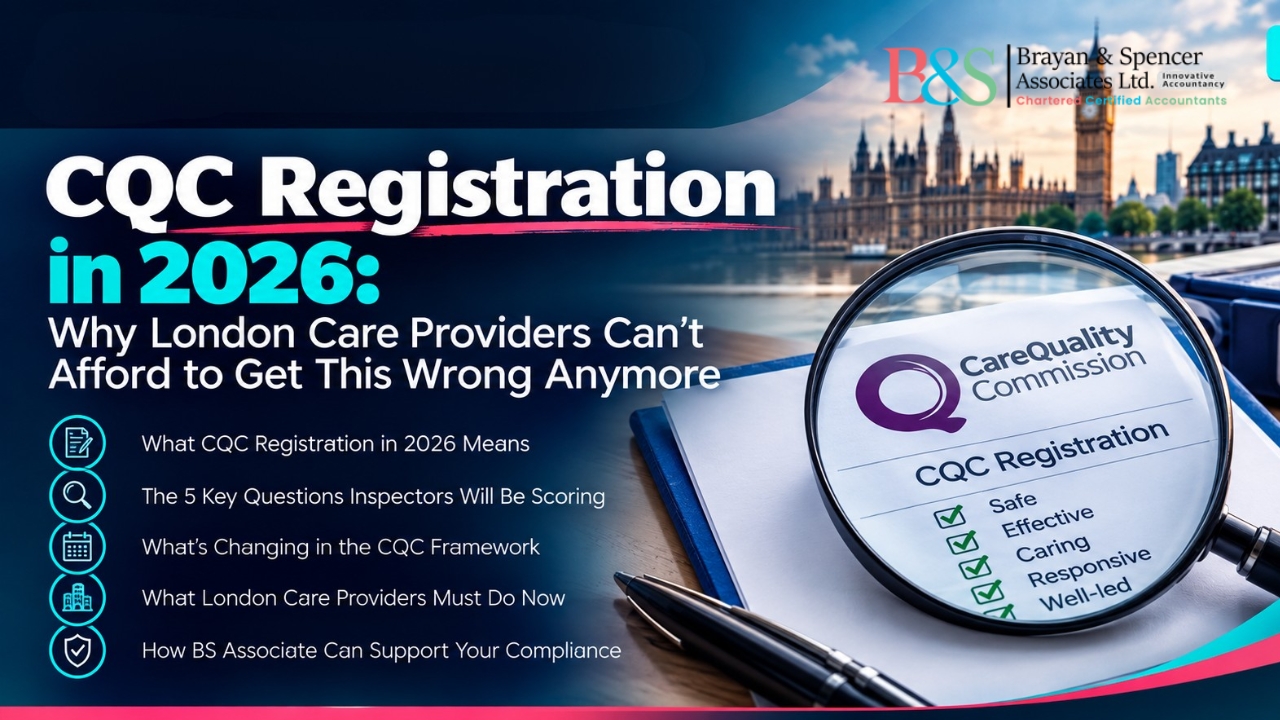
At the same time, businesses are facing changes in the regulatory landscape. The framework CQC has used since January 2024, the Single Assessment Framework, built around 34 quality statements, is retired. From summer 2026, CQC is rolling out four sector specific frameworks (adult social care, mental health, primary care and community services, and hospitals), replacing those 34 quality statements with 24 new Key Lines of Enquiry. The five key questions, Safe, Effective, Caring, Responsive, Well-led, stay the same. But how inspectors phrase what they are looking for, and how they score it, is changing from a percentage-based system to plain English “Rating Characteristics.”
If you are a new provider applying for CQC registration in London this year, or an established provider who has not had a fresh look at your compliance position in a while, this is genuinely one of the most important years to get it right. Here is what you need to know, and where Brayan & Spencer Associates fits in, whether you are registering for the first time or need an independent audit before your next inspection.
What Is CQC Registration Exactly?
CQC registration is the legal gateway to providing regulated health or adult social care activities in England. If your organisation carries out any of the CQC’s defined “regulated activities,” including personal care, nursing care, treatment of disease or injury, or diagnostic procedures, you cannot legally operate without it. These requirements are relevant for a wide range of healthcare businesses, including Croydon based home care agencies, Barnet residential homes, and smaller clinics in Central London.
In short: if you deliver care that falls under a regulated activity, CQC registration is not optional for paperwork. It is the difference between a lawful business and a criminal offence under the Health and Social Care Act 2008.
What Does CQC Stand For?
CQC stands for the Care Quality Commission, the independent regulator of health and adult social care in England. It monitors, inspects, and rates providers against five key questions, and it has the power to impose conditions, suspend registration, or shut down services that fall below the required standard.
What You Actually Need to Apply
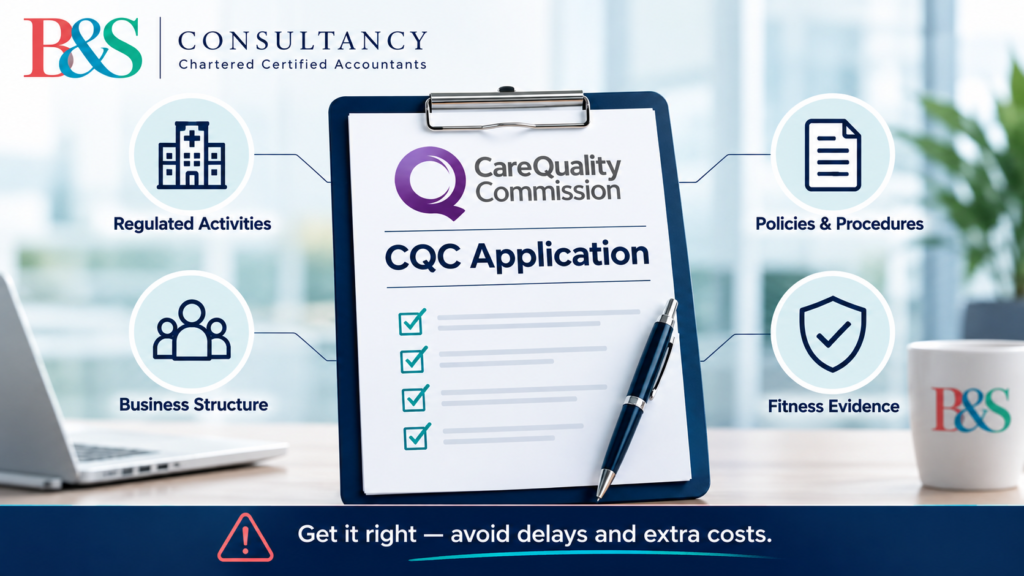
A CQC application is not a form you fill in over a coffee break. You will need to provide a detailed explanation of:
- Your regulated activities: Precisely which services you will deliver, and under which legal category.
- Your business structure: Whether you are applying as an individual, partnership, or organisation, and who your nominated individual and registered manager will be.
- Enhanced DBS checks: Every person working with service users’ needs an enhanced Disclosure and Barring Service check, including a check of the relevant barred list. Registered managers and providers need their own DBS check too.
- Policies and procedures: Well documented processes covering safeguarding, infection prevention, medication handling, complaints management, and other regulatory requirements, with evidence available when needed.
- Evidence of fitness: Proof that you, your nominated individual, and your registered manager meet the “fit and proper person” requirements.
- The application fee: Currently £1,522 for a new provider application in most cases, though CQC calculates ongoing annual fees separately based on your service type and size, so treat any flat figure as a starting reference rather than a fixed rule. The initial application fee is non-refundable. A rejected application means paying again.
Get any of this wrong or incomplete, and you are not just delayed. You are potentially out of £1,522 and starting from scratch, months behind where you wanted to be.
The 5 CQC Key Questions (What Inspectors Are Actually Scoring)
Whatever framework version is live when you are assessed, every CQC inspection comes back to the same five questions:
- Safe: Are people protected from abuse and avoidable harm?
- Effective: Does the care meet people’s needs and help them enjoy a good quality of life?
- Caring: Are people treated with compassion, dignity, and respect?
- Responsive: Are services organised around people’s actual needs?
- Well Managed: Is the organisation guided by effective leaders, robust governance, and a strong focus on continuous improvement?
Under the 2026 changes, “Safe” and “Well-led” are getting particular attention. Inspectors are now expected to look more closely at contingency planning, workforce resilience, and how providers use temporary or agency staff. If your governance documentation is thin, this is the year it gets noticed.
Already CQC Registered? Registration Was Only Round One
This is where a lot of London providers get complacent. Registration is not a certificate you frame and forget. It is the start of continuous scrutiny. And with CQC actively working through a backlog of aged ratings and pushing toward 9,000 assessments by September 2026, assuming they have forgotten about you is no longer safe.
An independent CQC compliance audit before your next inspection gives you:
- An honest, external view of where your evidence would fall short against the current, and incoming, framework.
- Time to close gaps in governance, staffing records, and quality monitoring systems before an inspector finds them.
- A structured action plan mapped against Safe, Effective, Caring, Responsive, and Well-led.
- Protection against the real cost of “Requires Improvement”: lost local authority contracts, reputational damage, and a mandatory reinspection within 12 months.
Brayan & Spencer Associates’s CQC compliance audit service is built specifically for providers who are already registered and want to know exactly where they stand before CQC does the finding for them.
How Brayan & Spencer Associates Supports London Care Providers
We work with providers across London on two fronts:
CQC registration support: from mapping your regulated activities and business structure correctly, through DBS coordination, policy preparation, and fitness assessments, to submitting an application that is built to be approved the first time, not the second.
Ongoing CQC audit services: for providers who are already registered and want a genuinely independent, evidence-based review of their compliance position ahead of inspection, particularly relevant now given the shift toward the new sector specific frameworks.
If you are weighing whether to handle this internally or bring in outside expertise, it is worth asking yourself one question: can you currently produce, on demand, the evidence an inspector would want under each of the five key questions? If the honest answer is “not quick,” an audit is the cheaper mistake to make.
Get in touch with Brayan & Spencer Associates today. Visit www.bsassociate.co.uk or call 0207 183 5956 to talk through your CQC registration or audit needs with our team.
Sources: GOV.UK, Register for CQC, CQC, What Registration Means
Ready to register with CQC or get an audit ready? Visit www.bsassociate.co.uk or call 0207 183 5956. Our team supports care providers across London through every stage, from first application to ongoing compliance.
Frequently Asked Questions
CQC registration is the legal process by which individuals and organisations gain permission from the Care Quality Commission to provide regulated health or adult social care activities in England. It is a legal requirement, not an optional accreditation.
CQC stands for the Care Quality Commission, the independent regulator responsible for monitoring, inspecting, and rating health and adult social care services in England.
The standard application fee for a new provider is currently £1,522, though CQC also charges an ongoing annual fee calculated by service type and size once you are registered. Budget separately for enhanced DBS checks, insurance, and any professional support you bring in to prepare your application.
CQC assesses every provider against five key questions: Safe, Effective, Caring, Responsive, and Well-led. These remain unchanged even as the underlying assessment framework is being replaced through 2026.
If you are delivering any CQC regulated activity, including personal care, nursing care, or treatment of disease or injury, you must be registered before you start operating. Expanding into new regulated activities or locations also usually requires a variation to your existing registration.