The way self employed individuals report their income to the UK tax authority is about to change significantly. Through the HM Revenue & Customs Making Tax Digital programme, the government is moving away from annual tax reporting towards a digital, more frequent system.
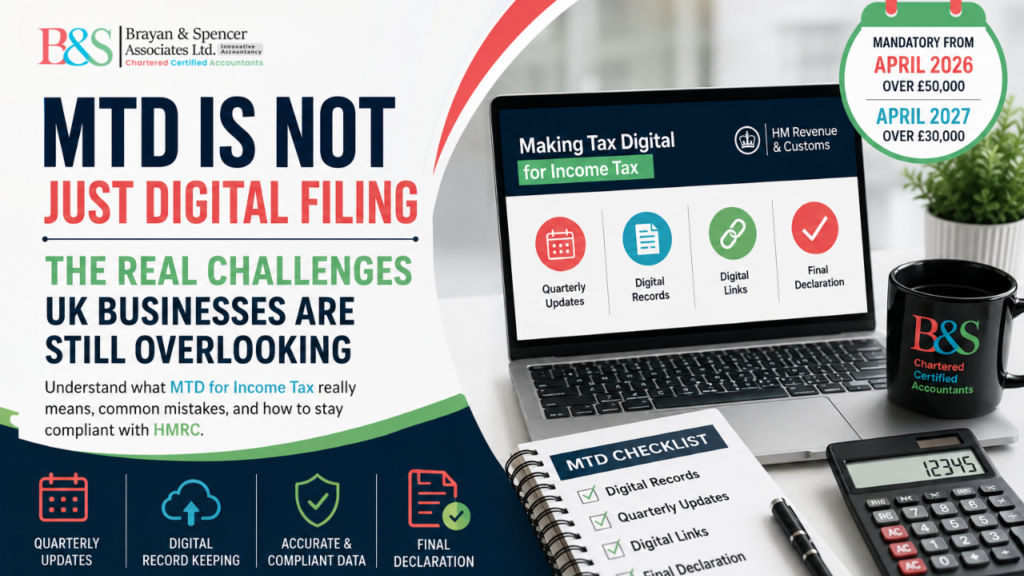
From April 2026, individuals earning more than £50,000 from self employment or property income will be required to follow Making Tax Digital for Income Tax Self Assessment (MTD for ITSA). Instead of submitting one annual Self Assessment return, taxpayers will maintain digital records and submit quarterly updates using approved software.
For many sole traders and landlords, this change means adapting to new systems, new reporting schedules, and new compliance requirements. While the goal of MTD is to reduce reporting errors and modernise tax administration, many business owners are still unsure how the process works in practice.
As the implementation date approaches, several common mistakes are emerging. Recognising these early can help sole traders prepare more effectively and avoid unnecessary complications.
1. Assuming MTD Starts Only in 2026
A common misconception is that nothing needs to change until April 2026.
Preparing for making tax digital for income tax often takes time. Businesses need to:
- choose compliant software
- organise digital bookkeeping systems
- understand quarterly reporting requirements
- connect their accounting tools with HMRC
Sole traders who start early have the advantage of testing their systems before mandatory reporting begins. Waiting until the final months can make the transition stressful, especially for individuals who previously relied on spreadsheets or paper records.
2. Believing Any Spreadsheet Counts as Digital Records
Many sole traders already use spreadsheets to track income and expenses, which leads to another misunderstanding.
Under MTD rules, digital record keeping means the data must be submitted digitally without manual reentry. According to guidance from HM Revenue & Customs, software must connect directly to HMRC systems through an API.
Spreadsheets can still be used, but only if they are linked to bridging software that allows digital submission. Simply copying figures from a spreadsheet into an online form would not meet the requirements.
This is why many small businesses are moving toward dedicated making tax digital software platforms such as:
- Xero
- QuickBooks
- FreeAgent
These tools automatically organise transactions, categorise expenses, and generate reports required for quarterly updates.
3. Treating Bookkeeping as a Year End Task
Traditionally, many sole traders collected receipts and organised their accounts only when the Self Assessment deadline approached.
Under making tax digital for income tax self assessment, this approach will no longer work effectively.
Businesses must maintain continuous digital records, including:
- income received
- allowable expenses
- transaction dates
- supporting documentation
If records are not maintained regularly, preparing quarterly updates becomes far more difficult. Digital bookkeeping systems help by automatically importing bank transactions and storing receipts electronically.
4. Miscalculating the Income Threshold
Another mistake is misunderstanding how eligibility for making tax digital for landlords and sole traders is determined.
The threshold is based on qualifying income, which includes:
- turnover from self employment
- rental income from property
Importantly, this figure is calculated before expenses are deducted.
For example:
- A sole trader earning
- £38,000 from freelance work
- and £15,000 from rental property
would have qualifying income of £53,000 and therefore fall within the April 2026 mandatory group.
Many taxpayers mistakenly calculate their eligibility based on profit rather than total income.
5. Confusing Quarterly Updates With the Final Tax Submission
One of the most misunderstood aspects of MTD is the reporting structure.
Quarterly updates do not replace the annual tax declaration. Instead, they provide regular summaries of business activity during the year.
Under the MTD framework, taxpayers will typically submit:
- four quarterly updates
- an end of period statement confirming business figures
- a final declaration that replaces the traditional Self Assessment submission
The final declaration still accounts for factors such as personal allowances and additional sources of income.
Understanding this structure helps prevent confusion about reporting obligations.
6. Not Separating Personal and Business Transactions
Many sole traders operate with a single personal bank account. While this may seem convenient, it often creates problems when preparing tax reports.
Mixing personal and business transactions can make it difficult to:
- identify deductible expenses
- track business income accurately
- maintain organised digital records
Opening a dedicated business account can make bookkeeping significantly easier, especially when using accounting software that automatically imports bank transactions.
7. Forgetting to Register and Authorise Software
Another practical issue occurs during the final step of MTD preparation.
Even if a sole trader installs compatible accounting software, they still need to register for the MTD service and authorise the software connection through their Government Gateway account.
Without proper authorisation:
- the software cannot submit updates
- quarterly reports may fail to send
- data may not reach HMRC systems correctly
Testing the connection before the first reporting deadline is therefore an important step.
Key Steps to Get Ready for Making Tax Digital for Income Tax
Sole traders and landlords who begin preparing early often find the transition much easier.
Helpful preparation steps include:
- reviewing income levels to confirm eligibility
- choosing reliable making tax digital software
- organising digital bookkeeping practices
- separating business and personal finances
- understanding the quarterly reporting schedule
Taking these steps gradually allows businesses to adapt to the new system without unnecessary pressure.
Guidance for Sole Traders and Landlords Navigating MTD
The transition to making tax digital for income tax self assessment can raise many questions, particularly for individuals who manage both business and rental income.
Some businesses choose to seek guidance from tax professionals who understand the reporting process and software requirements. Firms like Brayan & Spencer Associates help sole traders and landlords prepare for MTD. They set up digital systems and explain the new reporting framework.
Support services can include:
- software setup and training
- digital bookkeeping assistance
- quarterly MTD submissions
- year end declarations
- advice on possible MTD exemptions
For many small businesses, this type of practical support helps ensure that the transition to digital reporting is smooth and compliant.
Preparing for Making Tax Digital? Here’s What You Should Know
The introduction of making tax digital for income tax represents one of the most significant changes to Self Assessment in recent years. While the new system may seem complex at first, early preparation can make the process much more manageable.
If you would like guidance on preparing your records, selecting compliant software, or understanding the MTD reporting process, professional advice may help you avoid common mistakes.
📞 Call 0207 183 5956
🌐 Visit www.bsassociate.co.uk
Getting prepared early can help ensure your business is ready when the new digital reporting requirements begin.
Frequently Asked Questions
Starts 6 April 2026 for self-employed people and landlords earning over £50,000. It’s mandatory for income over £30,000 from April 2027 and over £20,000 from April 2028, with digital records and quarterly software updates.
Yes. Making tax digital for landlords applies if your combined income from property and self employment exceeds the threshold. Landlords must keep digital records and submit quarterly updates using compatible software.
No. Under making tax digital for income tax self assessment, taxpayers must submit four quarterly updates during the year and a final declaration to confirm the total tax position.
Yes. You must use making tax digital software that connects directly with HMRC systems. Popular options: Xero, QuickBooks, FreeAgent.
Sole traders and landlords must keep digital records of income, expenses, and transaction dates throughout the year to support quarterly submissions.
Late submissions may result in penalty points and possible fines under the system used by HM Revenue & Customs.